Broad Peak
The ClimbBroad Peak is both an imposing high-altitude objective and a turning point in the lives of Scott Fischer and Lene Gammelgaard. In 1995, Fischer wanted Gammelgaard to climb her first 8,000-meter peak there; instead, the trek to its base camp became the setting for her deliberate decision to leave serious mountaineering behind. The expedition also exposed the strain Fischer was carrying into the preparations for Everest.
Mountain and climbing history
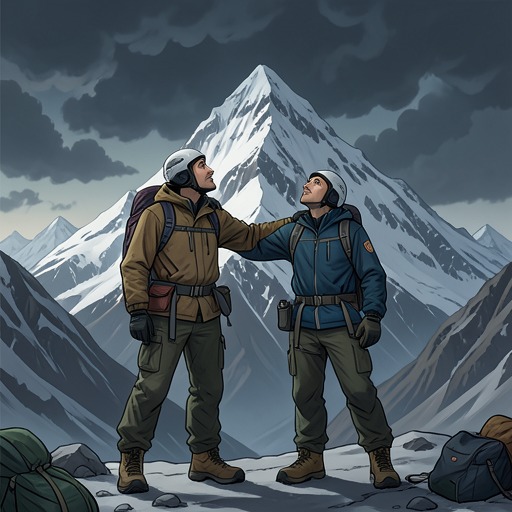
Broad Peak belongs to the world’s 8,000-meter peaks, but its reputation rests on more than its height. Its pyramidal mass pushes the hardest climbing onto high sections of its flanks, and its difficult routes had been marked by numerous tragic summit attempts. Fischer knew that history firsthand: in August 1992, after reaching the summit, he descended at night through a snowstorm while lowering the incapacitated Gary Ball, secured to his harness, below him. Ball was suffering from a pulmonary ailment and could not move under his own power; Fischer’s actions helped save his life.
That rescue forms part of the contrast in the book’s treatment of high-altitude ambition. Fischer had already faced Broad Peak’s danger as a climber, and later contemplated commercial expeditions to even more demanding peaks. His experience did not remove the mountain’s risks; rather, it made the need for capable guides, careful client selection, good weather, and luck impossible to ignore.
The 1995 expedition and Gammelgaard’s decision
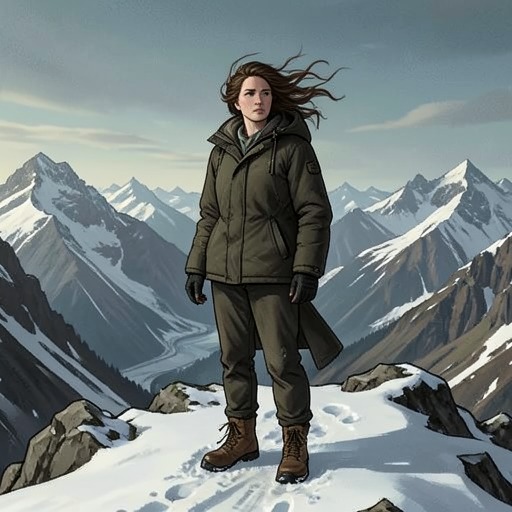
Fischer encouraged Gammelgaard to join his 1995 Broad Peak expedition and attempt her first 8,000-meter summit. They had met in the Himalaya in 1991 and stayed in personal correspondence, sharing thoughts about their ambitions and futures. By the time the expedition came together, however, Gammelgaard’s priorities had changed: she wanted a family and a settled life, and no longer wanted to spend that life climbing major mountains.
The trek toward Broad Peak Base Camp gave her the occasion to make the decision explicit to Fischer. She chose to be satisfied with the trek rather than continue toward the summit, understanding this not as an accidental retreat but as a conscious, mature choice. The mountain therefore marks a personal turnaround even though Gammelgaard did not climb it.
After returning to Denmark, Gammelgaard waited to hear whether Fischer had come safely down from Broad Peak before committing herself to the Everest expedition. Once she knew he was safe, she began raising sponsorship. The work required eight to ten hours a day of calls, letters, promotion, and press activity. Fischer wanted her on the team and offered support with fundraising, so Broad Peak’s expedition carried consequences beyond the climb itself: it helped lead Gammelgaard back into the mountaineering world in a different role.
Fischer’s limits and Everest’s material constraints
Gammelgaard saw Fischer as unusually exhausted and repeatedly unwell during the period leading from Broad Peak toward Everest. His schedule included a large Kilimanjaro expedition in January 1996 before the Everest climb. She urged him to rest, even suggesting that he might need half a year or a full year away from exertion. After the challenges of Broad Peak, Fischer had written to her that he needed to become humble because he did not want to die in the mountains.
Her recollection also complicates the image of Fischer as a heroic, inexhaustible climber. She believed that supporters saw the hero they expected rather than the tired person before them, while the business depended on his public image and he continued to play his part in sustaining it. Broad Peak thus remains present in the Everest narrative not only as a past climb but as part of the pressure and fatigue surrounding Fischer’s next undertaking.
That pressure intersected with practical limits on Everest. At Camp IV, Mountain Madness had sixty-two oxygen canisters: nine heavier Zvesda canisters reserved for sleeping and fifty-three lighter Poisk canisters allocated to the May 10 summit attempt. Five climbing Sherpas took twenty-one bottles among them; the guides and clients carried seventeen. Together, the climbers took thirty-eight Poisk canisters uphill, leaving fifteen full ones at Camp IV, along with whatever remained of the Zvesda supply. The margin was too small to support an overnight delay and a second summit attempt on May 11.
Broad Peak’s relevance to the Everest story is therefore not confined to its summit history. It links Fischer’s earlier rescue and later ambitions to Gammelgaard’s changed priorities, his visible exhaustion, and the narrow logistical margin with which his team approached the Everest summit bid.